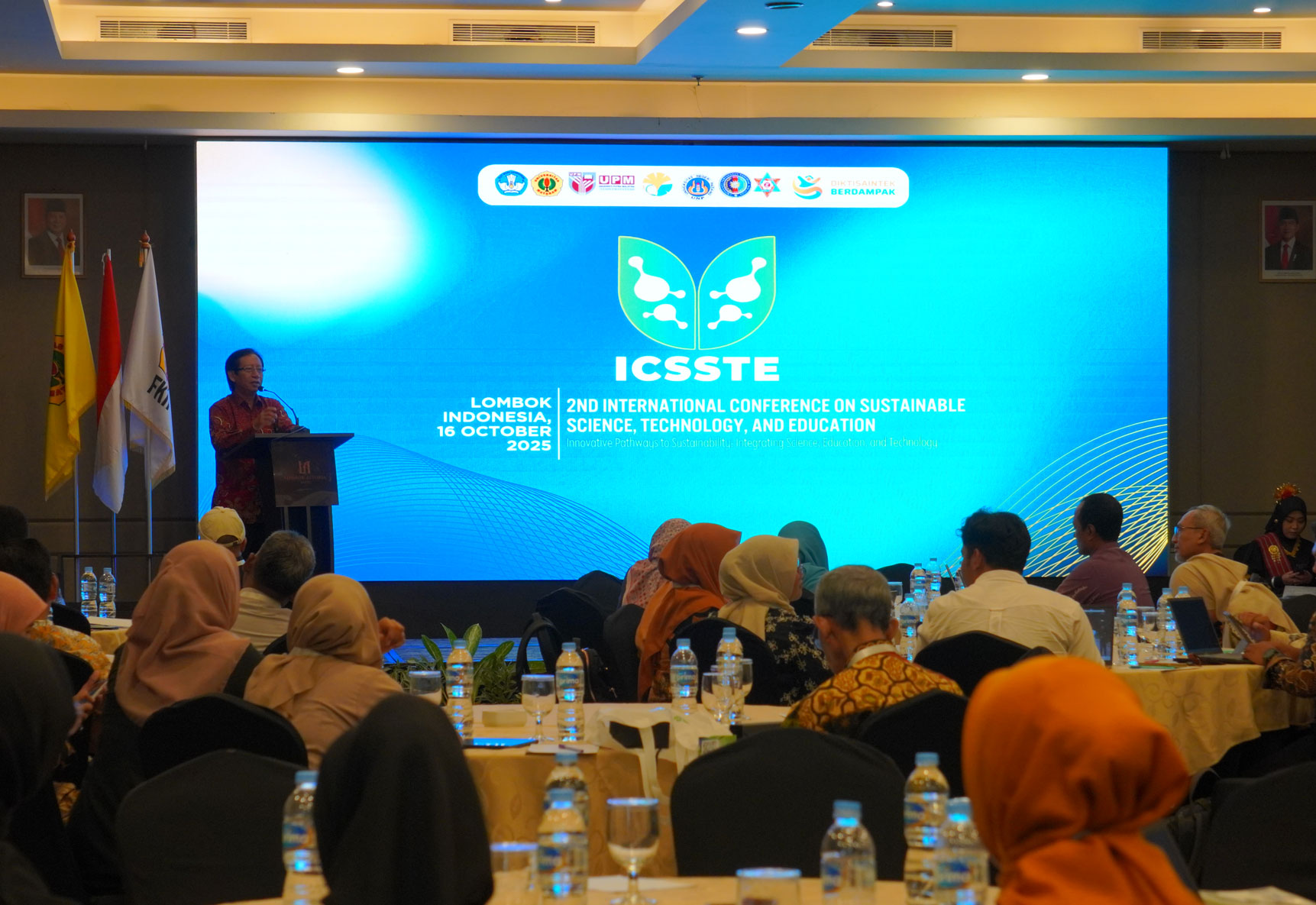
Lombok, October 16–17, 2025 — The Faculty of Teacher Training and Education (FKIP), University of Mataram, once again hosted a prestigious international academic event, The 2nd International Conference on Sustainable Science, Technology, and Education (ICSSTE), held at the Lombok Astoria Hotel. This year’s conference carried the theme “Innovative Pathways to Sustainability: Integrating Science, Education, and Technology,” aiming to strengthen the synergy among science, technology, and education in addressing global sustainability challenges.
In his opening remarks, the Chair of the Committee, Prof. Drs. Aris Doyan, M.Si., Ph.D., stated that ICSSTE 2025 was designed to bring together researchers, academics, and industry experts from various countries to exchange ideas and foster tangible contributions to sustainable development. “We hope this conference serves as an inspiration to bridge science and education in creating impactful innovations,” he remarked.
The conference was officially opened by Prof. Ir. Dahlanuddin, M.Rur.Sc., Ph.D., Head of the Office of International Affairs, representing the Rector of the University of Mataram. In his address, he expressed appreciation to all participants and speakers attending both online and offline. “ICSSTE is a valuable platform to expand research networks and international collaboration. Through this conference, we hope the University of Mataram continues to make a global impact,” he said.
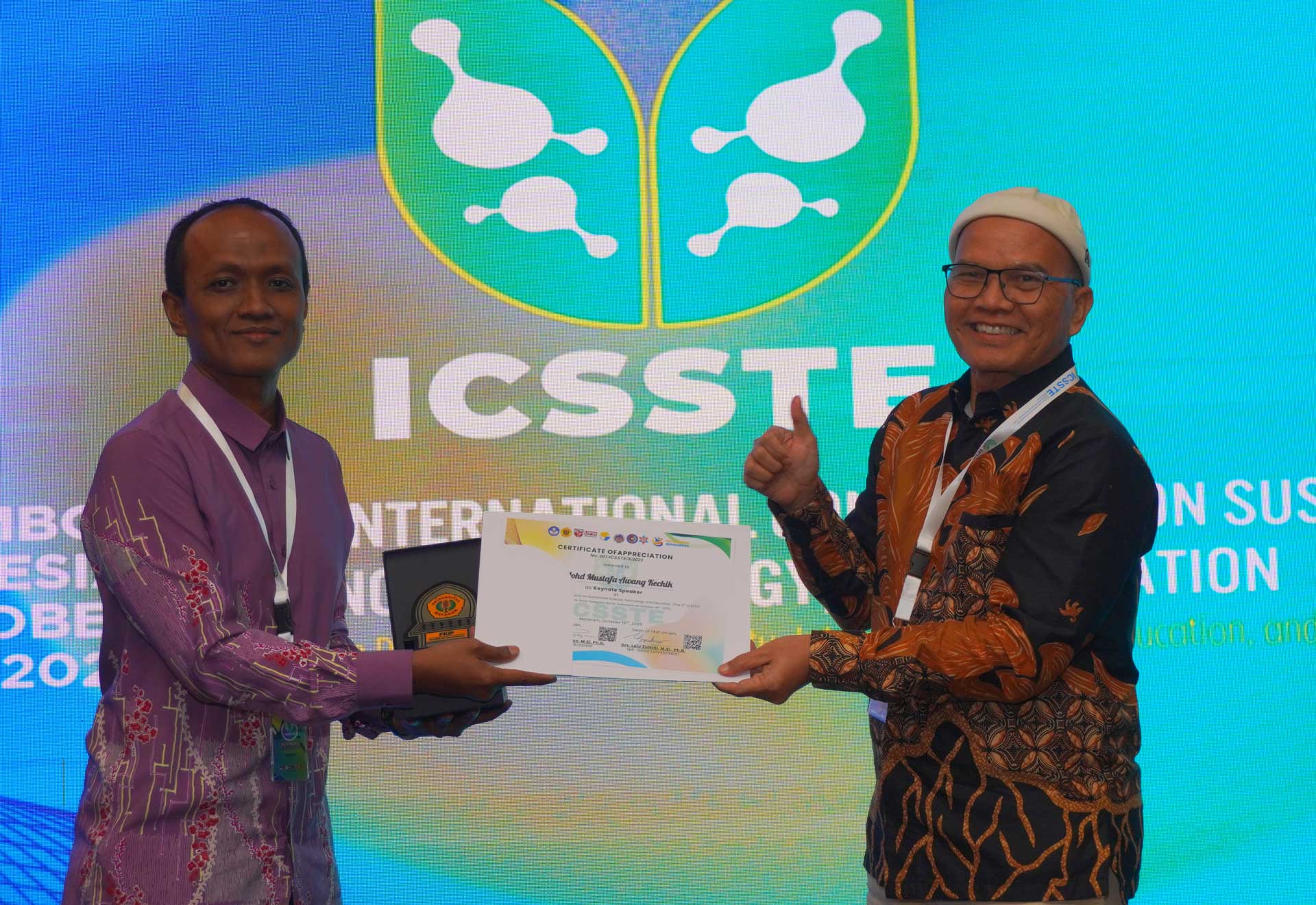
The event featured five keynote speakers from different countries, including Dr. Mohd Mustafa Awang Kechik (Universiti Putra Malaysia), Dr. Dev Raj Joshi (Tribhuvan University, Nepal), Dr. Muhammad Aziz (The University of Tokyo, Japan), Dr. Lynette Pretorius (Monash University, Australia), and Prof. Dr. Imam Bachtiar (University of Mataram, Indonesia). The keynote sessions covered strategic topics ranging from renewable energy and environmental conservation to inclusive, future-oriented science education.
Additionally, the conference welcomed invited speakers such as Dr. Hamdi Rifai (Universitas Negeri Padang), Prof. Dr. Susilawati (University of Mataram), Dr. Wan Yusmawati binti Wan Yusoff (National Defence University, Malaysia), and Prof. Dr. Agus Abhi Purwoko (University of Mataram). They highlighted pressing issues in balancing technological advancement with environmental sustainability.
ICSSTE 2025 encompassed a wide range of fields, including Environmental Conservation and Biodiversity, Renewable Energy and Sustainable Technology, Science and STEM Education, and Education for Sustainable Development. Presentations and discussions addressed global issues such as climate change, green energy, natural resource management, and the integration of innovative technologies in sustainable education.
The conference served as a multidisciplinary collaboration platform that reaffirmed the University of Mataram’s role as a center for globally oriented scientific and educational development. Through ICSSTE 2025, FKIP Unram strengthened its contribution to supporting the Sustainable Development Goals (SDGs)—particularly SDG 4 (Quality Education), SDG 7 (Affordable and Clean Energy), SDG 13 (Climate Action), and SDG 17 (Partnerships for the Goals).
With a spirit of innovation and collaboration, ICSSTE 2025 stands as a vital momentum in building a sustainable future through the integration of science, education, and technology.
#ICSSTE2025 #FKIPUnram #UnramUnggul #SDG4 #SDG7 #SDG13 #SDG17 #Sustainability #GlobalConference #RenewableEnergy #EducationForSustainability #ScienceAndTechnology #CollaborationForChange